 Xpress News24
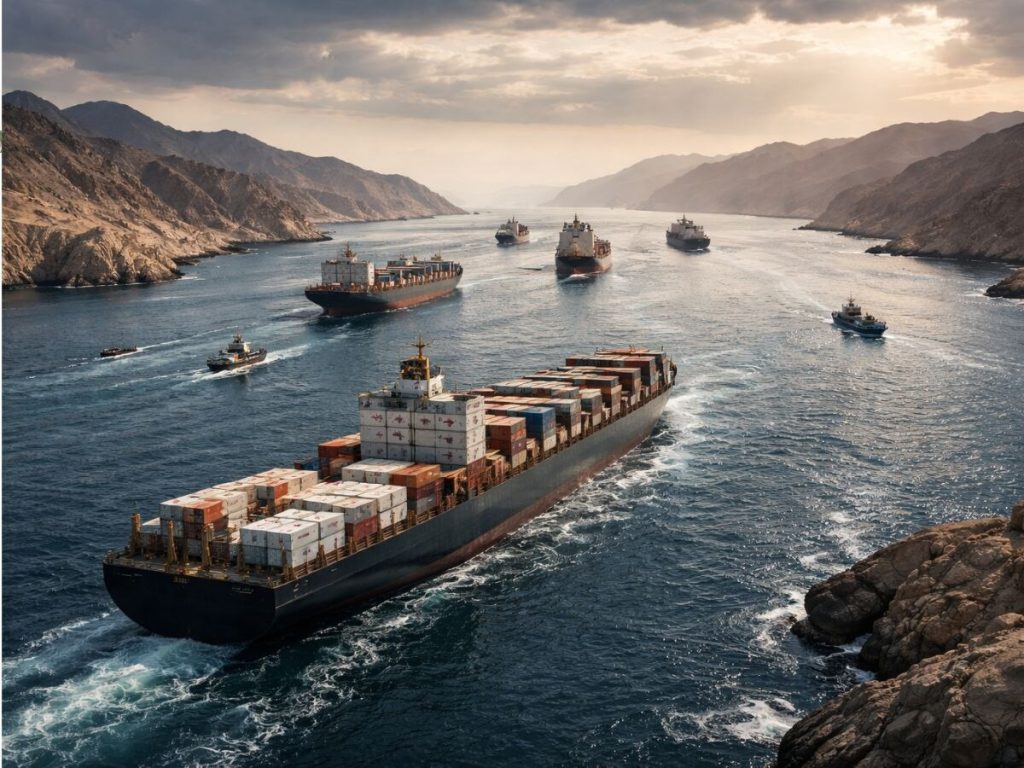
DUBAI/MUSCAT: The situation in the Strait of Hormuz—one of the world’s most sensitive and vital maritime choke points—has deteriorated sharply as persistent attacks on commercial vessels trigger a massive marine oil spill. The toxic slick has rapidly expanded, contaminating the coastal waters of both Iran and Oman and threatening the region’s marine ecosystem while bringing commercial shipping to a virtual standstill.
Hundreds of Square Kilometers Contaminated
According to recent reports, approximately 2,000 square kilometers of the maritime zone in the Strait of Hormuz have been impacted by the ongoing spill.
Near the Iranian coast alone, oil has spread across an area of roughly 300 square kilometers, bringing thick, polluted water to the shores of Qeshm Island and Sirri Island. Estimates indicate that roughly 380,000 liters of crude oil have leaked into the water. The crisis has equally hit neighboring Oman, where an estimated 390 square kilometers of coastal sea are covered in oil slicks, posing an imminent danger to marine life.
Root Cause: Tanker Attacks on August 3
The environmental disaster originated on August 3, when two oil tankers—the Minoan Pioneer and the Caroline Bezengi—were targeted near the coast of Oman.
The resulting structural damage caused continuous leakage from the vessels. Driven by natural sea currents, the spilled oil drifted toward the shorelines of both Oman and Iran. Observers note that Tehran likely did not anticipate that the fallout from targeting these tankers would boomerang to pollute its own strategic islands and beaches.
Shipping Operations and Safety Hazards
Navigating the affected waters has become perilously hazardous. Maritime experts warn that a single engine spark could ignite the floating surface oil, leading to catastrophic fires.
Furthermore, drawing seawater for engine cooling systems risks severe mechanical failures as the oily water enters intake valves. This has heavily disrupted operations for Iran’s shadow fleet of oil carriers. Compounding the issue, a strict US naval blockade and fears of secondary drone strikes have deterred international environmental cleanup crews and agencies from entering the conflict zone to clear the spill.
Escalating Tensions and Underwater Drones
Adding to the regional instability, reports indicate that United Arab Emirates (UAE) oil tankers have also been targeted. While the full extent of the damage to UAE assets remains unquantified, analysts fear that any subsequent leaks from these vessels will amplify an already catastrophic environmental footprint.
Concurrently, tensions in Hormuz have escalated further with Iran deploying its advanced “Azdar” underwater drones. Capable of carrying a 200-kilogram explosive payload with a strike range of 600 kilometers, these submerged weapons have introduced a new tier of naval warfare.
Closure of the Strait and Outlook
Amid the standoff, Iran has maintained that the Strait of Hormuz will remain sealed until all of its strategic demands are met. Any tanker attempting to transit the corridor with its radar disabled faces an immediate risk of attack, which threatens to compound the volume of oil leaking into the sea.
With naval blockades paralyzing domestic oil exports, experts warn that if storage capacities reach their absolute limits, authorities may be forced to intentionally dump excess reserves, worsening the ecological disaster. Even if a diplomatic breakthrough occurs, neutralizing and cleaning up the widespread marine pollution will require a monumental, multi-year effort.