 Xpress News24
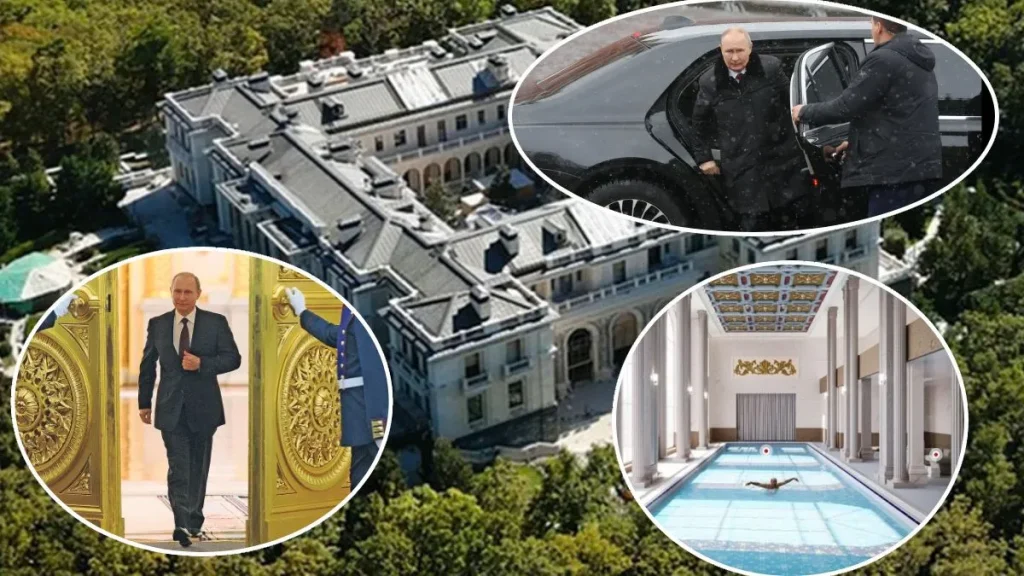
New Delhi: Russian President Vladimir Putin’s India visit during the BRICS Summit has once again put the long-time Russian leader at the centre of global diplomatic attention. While Putin’s public image is closely associated with power, discipline and calculated political moves, his early life and rise through the Soviet security system offer a very different story.
Born on October 7, 1952, in Leningrad, now St Petersburg, Putin grew up in a modest family in a communal apartment, where several families shared the same building and living conditions were far from comfortable.
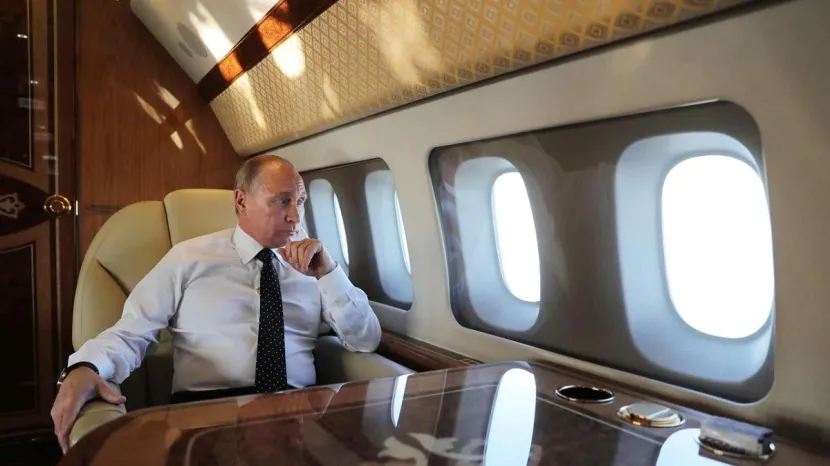
An incident from his childhood has often been highlighted in accounts of Putin’s early years. In his autobiography First Person, he recalled chasing rats in the stairways of his building. On one occasion, after cornering a large rat, he said the animal suddenly turned and attacked him. The experience, as he described it, taught him an enduring lesson about the dangers of pushing an opponent into a corner.
As a teenager, Putin also developed an interest in martial arts. Around the age of 11 or 12, he began training in sambo and judo, partly as a way of learning self-defence. He went on to compete successfully at the local level and later earned a black belt in judo.
But another teenage decision would prove far more consequential.
At the age of 16, Putin reportedly walked into the KGB headquarters in Leningrad and asked how he could join the Soviet intelligence service. Officials told him that recruitment was selective and advised him to either serve in the military or study law at university first.
Putin followed the second route. He enrolled at Leningrad State University, where he studied law and graduated in 1975. The same year, he joined the KGB and began his career in the Soviet security apparatus.
His professional training later took him to Moscow, where he attended the KGB Red Banner Institute during the mid-1980s. The training included foreign intelligence and German language studies, areas that would become relevant to his subsequent overseas posting.
Putin was then assigned to Dresden in East Germany, where he served as a KGB officer from 1985 to 1990 and worked in coordination with East Germany’s security service, the Stasi. His Dresden posting coincided with a period of dramatic political change in Eastern Europe, including the fall of the Berlin Wall in 1989.
He returned to Leningrad in 1990, as the Soviet political system was moving towards a historic transformation. It was during this period that Putin began moving into politics, working with his political mentor Anatoly Sobchak.
His career subsequently shifted rapidly from local administration to the centre of Russian power. After moving to Moscow in 1996, Putin became head of the Federal Security Service, or FSB, in 1998. He was appointed prime minister in 1999.
On December 31, 1999, President Boris Yeltsin resigned and Putin became acting president of Russia. He formally won the presidency in 2000 and went on to become the dominant figure in Russian politics.
From a childhood spent in a modest communal apartment to a career in the KGB and eventually the Kremlin, Putin’s political journey has been shaped by several major turning points. His early interest in martial arts, intelligence work and the political upheaval surrounding the collapse of the Soviet Union all form part of the background to the leader who would later become one of the most influential figures in contemporary international politics.