 Xpress News24
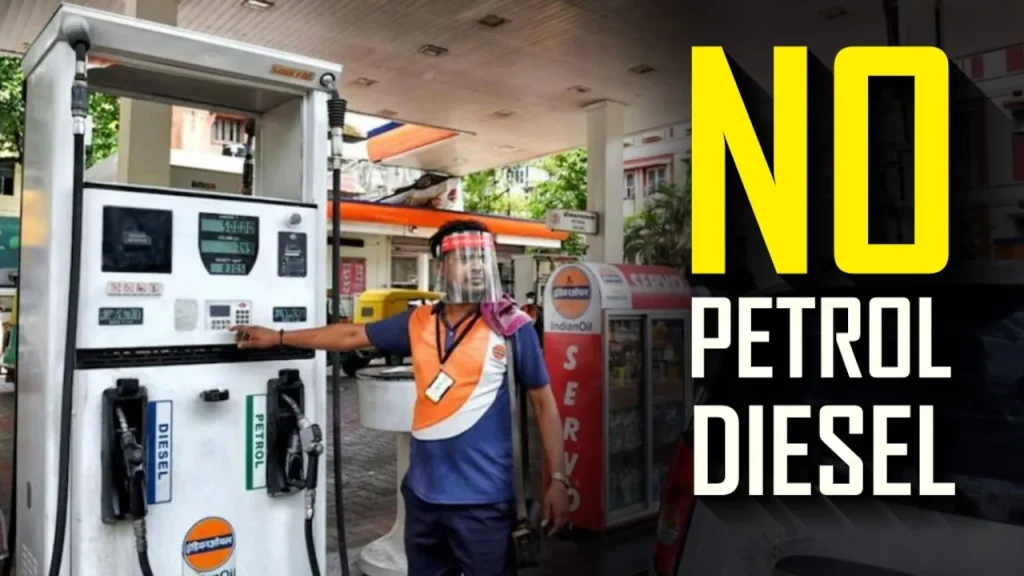
In a stern measure to ensure strict road safety and compliance with traffic regulations, the Supreme Court of India has issued a landmark directive. The apex court has instructed the Ministry of Road Transport and Highways (MoRTH) and the Insurance Regulatory and Development Authority of India (IRDAI) to develop a specialized pilot project. Under this upcoming system, vehicle fuel supplies at petrol pumps will be directly linked to the vehicle’s insurance status, tightening the noose around uninsured vehicles.
Fuel Refill at Petrol Pumps Tied to Insurance Status
To implement strict ground-level compliance, the court proposed that vehicles lacking a valid third-party insurance policy should be denied fuel at petrol stations until valid coverage is acquired. A bench comprising Justice Sanjay Karol and Justice Prashant Kumar Mishra clarified that this directive acts as a structured, practical recommendation rather than an absolute mandatory writ (mandamus). This mechanism is expected to instantly spot unregistered or uninsured vehicles while heavily compelling owners to keep their policies active.
Over 56 Percent of Vehicles Plying Without Insurance
Expressing deep concern, the Supreme Court noted that out of 30.48 crore registered vehicles across the country, roughly 16.54 crore vehicles—amounting to an alarming 56 percent—are being driven without any insurance. Due to this massive loophole, road accident victims and their grieving families are forced into grueling, prolonged legal battles just to secure fair compensation. The court reiterated that Section 146 of the Motor Vehicles Act makes third-party insurance compulsory specifically to shield accident victims from financial distress and endless litigation.
Mandatory Insurance Tenure Extended for New Vehicles
Revising earlier guidelines, the court has extended the mandatory third-party insurance duration for newly purchased vehicles. Back in 2018, the court had mandated a 3-year policy for new four-wheelers and a 5-year policy for two-wheelers at the time of purchase. Citing that a large chunk of vehicles still operate without valid coverage despite those rules, the court has pushed the timeline up by an additional year. Going forward, new car buyers must purchase a 4-year third-party cover, while two-wheeler owners must secure a 6-year cover. IRDAI has been directed to enforce these changes immediately.
Digital Tracking via ANPR Cameras and E-Challans
To strengthen digital enforcement, the Supreme Court ordered authorities to integrate Automatic Number Plate Recognition (ANPR) cameras—already installed on highways—with the Insurance Information Bureau (IIB) database and the VAHAN portal. This integration will allow authorities to automatically issue e-challans to uninsured vehicles. Furthermore, state traffic police will be equipped with mobile applications and handheld devices linked to these central databases to verify insurance statuses in real-time.
Concluding the hearing on a related motor accident claim, the Supreme Court also upheld a Telangana High Court ruling that granted compensation to a deceased vehicle owner’s family under a comprehensive policy, directing all concerned stakeholders to file compliance reports by August 14, ahead of the next hearing on August 18.