 Xpress News24
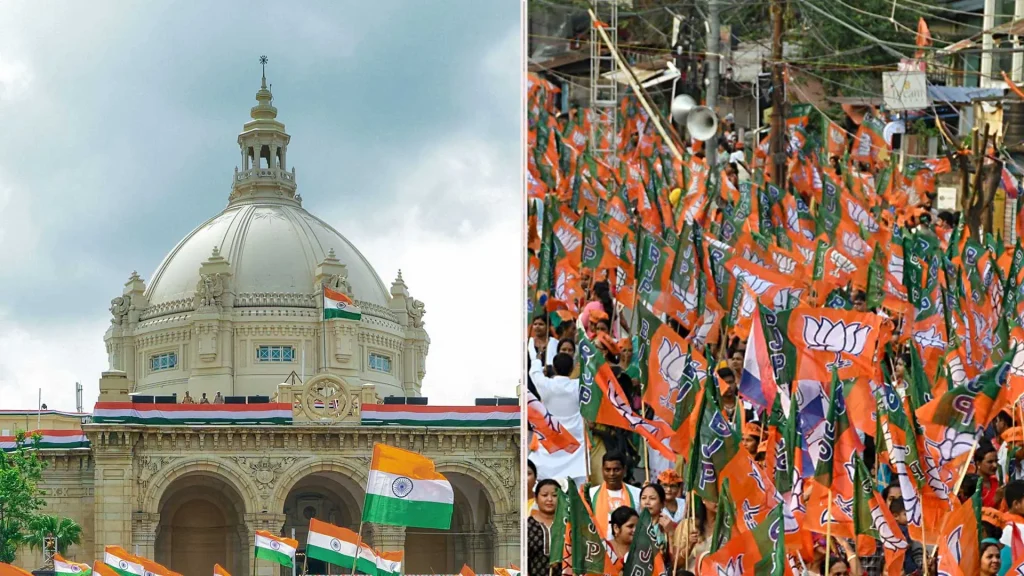
With the Uttar Pradesh Assembly elections around six months away, the BJP has intensified its preparations for a third consecutive term in the state. Senior organisational leaders have stepped up visits and meetings, but the feedback emerging from recent discussions has reportedly raised concerns within the party.
Sources said meetings led by BJP organisational general secretary BL Santosh and state in-charge Vinod Tawde focused on ground-level feedback, the mood among workers, the performance of MLAs and the emerging electoral narrative. One of the key concerns is that the 2027 contest could increasingly revolve around caste equations rather than the religious and Hindutva issues that have played a major role in previous elections.
According to sources, the party leadership is assessing whether a caste-driven campaign could create difficulties for the BJP, particularly if opposition parties succeed in consolidating specific social groups. The feedback has prompted discussions on how the party can retain its broader social coalition while preventing the election narrative from becoming dominated by caste calculations.
Worker dissatisfaction has also emerged as a major concern. Sources said complaints about a lack of recognition and inadequate attention to the concerns of grassroots workers were discussed during organisational meetings. The issue is significant because the BJP’s electoral machinery in Uttar Pradesh has traditionally depended heavily on its booth-level network.
Similar concerns were discussed after the 2024 Lok Sabha elections, when questions were raised about the performance and morale of the organisation in several parts of the state. The leadership now wants to avoid a repeat of that situation before the Assembly polls.
The performance of sitting MLAs is another area under scrutiny. Sources said the party has received feedback about dissatisfaction with some legislators in their constituencies. The BJP is also understood to have conducted an internal assessment of its MLAs, with claims that more than 100 legislators are facing significant anti-incumbency. The exact findings of any such internal survey have not been officially made public.
Questions have also been raised over the new organisational team. According to sources, some newly appointed office-bearers have not received an entirely positive response at the grassroots level. There have also been internal discussions around certain appointments and the selection process. With the election approaching, however, the leadership is expected to focus on making the new team fully operational rather than allowing organisational differences to continue.
Another point of concern is the BJP’s assessment of the overall contest. Sources said the party does not currently view the 2027 election as a one-sided battle. Instead, internal feedback reportedly suggests that the contest could be competitive. That assessment makes the coming months important, particularly if the opposition succeeds in establishing a stronger narrative around governance, employment and social representation.
Social media has emerged as another key battleground. Party sources said the BJP and the government will need to respond more aggressively to opposition narratives on digital platforms. The focus is particularly on younger voters and first-time electors, for whom issues circulating on social media can influence political perceptions.
Employment and unemployment are also expected to remain central to the campaign. The BJP is looking to highlight government schemes and achievements while developing a clearer message on jobs, recruitment and competitive examinations. The issue could become particularly important if opposition parties manage to turn youth dissatisfaction into a wider electoral narrative.
The situation within the Bahujan Samaj Party is being watched closely as well. The BJP is assessing the possible impact of any weakening or fragmentation of the BSP’s support base, particularly among Dalit voters. The 2024 Lok Sabha election showed that changes in the distribution of BSP votes can have a significant impact on contests between the BJP and opposition parties.
BL Santosh’s three-day Uttar Pradesh visit has therefore assumed significance. Meetings with organisational leaders and office-bearers covered ground-level preparations, worker mobilisation, MLA performance and the broader electoral situation. Sources said Santosh may submit a detailed assessment to the central leadership, following which the BJP could further refine its strategy for the 2027 polls.
The message emerging from the meetings is reportedly one of greater coordination between the government and organisation. With the BJP seeking a third consecutive government in Uttar Pradesh, the leadership now has roughly six months to address internal concerns and strengthen its campaign before voters return to the ballot box.