 Xpress News24
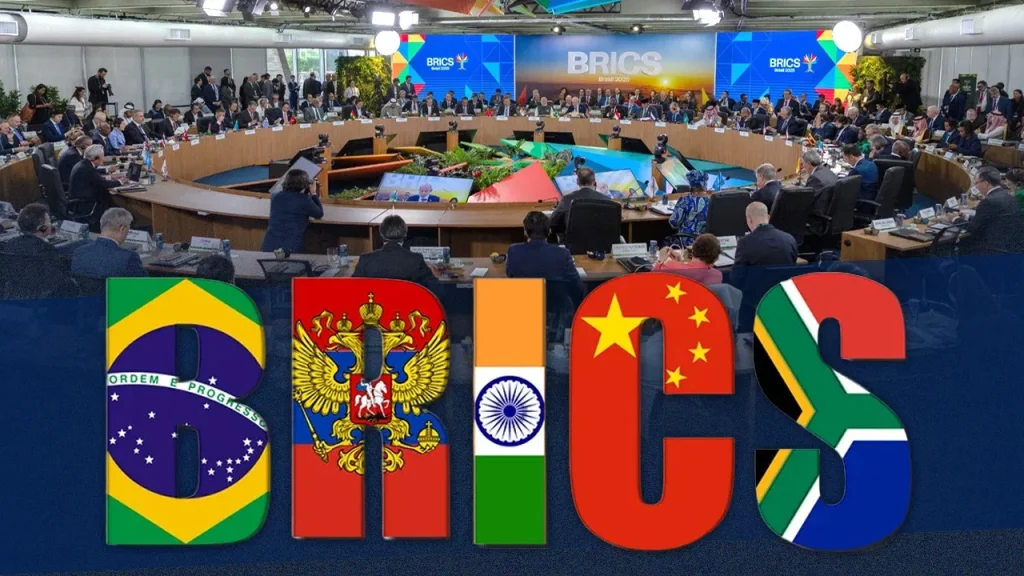
New Delhi: As India prepares to host the 18th BRICS Summit at Bharat Mandapam on September 12 and 13, one question is likely to come up outside the conference rooms as well: what do member countries actually gain from BRICS?
The grouping has grown far beyond its original five-member format. BRICS now has 11 members — Brazil, China, Egypt, Ethiopia, India, Indonesia, Iran, Russia, Saudi Arabia and South Africa, along with the UAE. Together, the members account for about 49.5% of the world’s population, 40% of global GDP and 26% of global trade.
For India, hosting the summit is not just about diplomacy. It provides a platform to push economic, trade and development priorities while strengthening its position among emerging economies. India assumed the BRICS chairship for the fourth time in 2026, under the theme “Building for Resilience, Innovation, Cooperation and Sustainability.”
What does India gain?
Trade is one of the clearest benefits. Intra-BRICS merchandise trade has risen sharply over the years, reaching $1.17 trillion in 2024, according to the Commerce Ministry. India exported goods worth an estimated $82 billion to BRICS countries in FY 2025-26, apart from $31.3 billion in services in 2024.
The grouping can give Indian businesses greater access to markets in Asia, Africa, the Middle East and Latin America. Pharmaceuticals, agricultural products, machinery, technology and services are among the sectors where India sees opportunities.
Energy security is another important area. India’s engagement with Russia and other energy-producing BRICS members can help diversify supplies. At the diplomatic level, BRICS also gives New Delhi a platform to push for a greater voice for developing countries in global institutions.
Why is BRICS important for China?
For China, BRICS is both an economic and geopolitical platform. The grouping gives Chinese companies access to large emerging markets and creates opportunities in infrastructure, manufacturing, technology, logistics and energy.
Beijing also sees value in expanding economic links that do not depend entirely on Western markets and financial systems. Discussions around local-currency settlements and payment mechanisms are part of this wider conversation.
But the benefit for China is not only commercial. BRICS allows Beijing to project itself as an important voice of the Global South and argue for a more representative international order.
Why does Russia need BRICS?
The importance of BRICS has increased for Russia amid its prolonged tensions with Western countries and sanctions.
Moscow can use the grouping to maintain and expand trade relationships with countries such as India and China. Energy, fertilisers, minerals, agriculture and other commodities remain important areas of cooperation.
Local-currency trade is also relevant for Russia because it can reduce dependence on Western-dominated financial channels. BRICS provides Moscow with another diplomatic platform where it can engage with major non-Western economies.
What do Brazil and South Africa get?
Brazil has an opportunity to expand markets for agricultural commodities, food products, minerals and energy. BRICS also gives Brasília a larger platform to raise issues such as climate change, sustainable development and the interests of developing economies.
For South Africa, the grouping provides a bridge between Africa and other major emerging economies. It can seek investment, technology and cooperation in infrastructure, energy, healthcare and skills while bringing African priorities into discussions involving the world’s major emerging markets.
Why does the New Development Bank matter?
One of BRICS’ most tangible institutions is the New Development Bank (NDB). Its purpose is to finance infrastructure and sustainable development projects in member countries and other eligible economies.
For developing countries, access to alternative sources of development finance can be significant. Roads, transport, energy, water and other infrastructure projects require large amounts of long-term capital, and the NDB adds another financing channel alongside traditional multilateral institutions. BRICS has also backed greater use of local currencies and explored payment mechanisms among members.
The benefits come with limitations
BRICS is not a military alliance or a single economic market. Its members have different political systems, economic priorities and foreign-policy interests.
India and China, for instance, continue to manage a complicated bilateral relationship. Trade imbalances, geopolitical disagreements and different positions on international conflicts can make consensus difficult.
The challenge, therefore, is to convert the group’s growing economic weight into practical cooperation. India’s 2026 chairship has already produced ministerial-level initiatives on trade, MSMEs, agriculture, labour, technology and industrial cooperation. The Commerce Ministry has said there remains considerable scope for deeper intra-BRICS trade and more resilient supply chains.
The Delhi summit will test how far those discussions can move from declarations to implementation. For India and its BRICS partners, that may ultimately be the more important measure of what the grouping is worth.